
For running, cycling, triathlon and cross-country ski coaches
Strength workouts built from exercises with video — not text and links
Build a strength session from a library of 2,000 exercises: sets, reps, load and rest, in the same calendar as running and cycling. The athlete sees the technique on video and works through the session set by set, and you see what was actually done.
Start for freeThe library and the builder are part of PaceTrack for coaches. Already on PaceTrack? Log in — the “💪 Exercises” button is in the strength plan form.
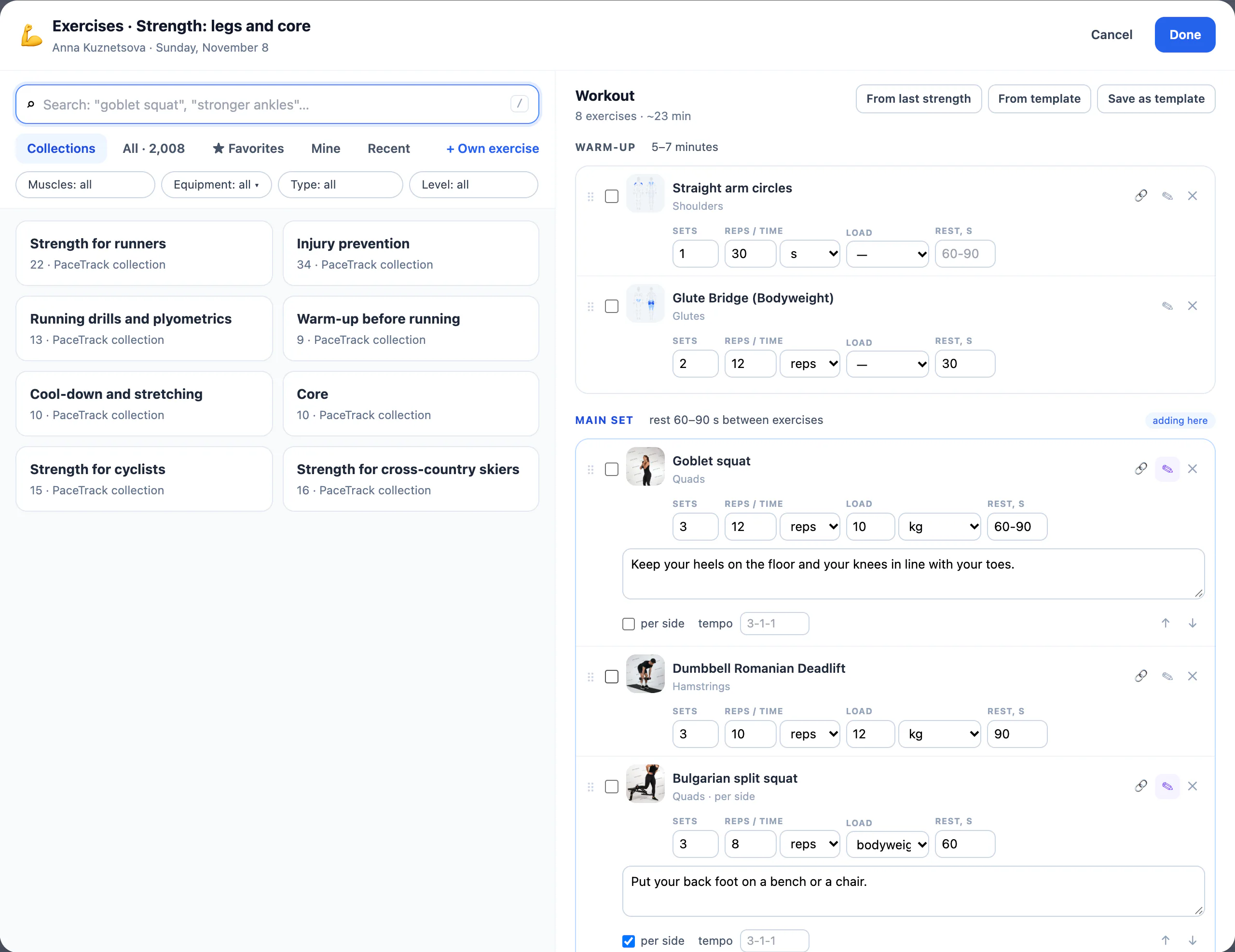
The builder opens over the athlete calendar: catalog and collections on the left, the workout in blocks on the right.
2,000+
exercises with technique video, steps and tips
8
collections: running, cycling, skiing, core, injury prevention
3
languages: English, Spanish and Russian
Free
for the strength workouts a coach builds for their athletes
Sound familiar?
Seven strength-training situations every endurance coach and athlete runs into — and what PaceTrack does about them.
For the coach
01 · Text and links
A strength session is half a page of text and five links to other people’s videos
Exercise names, sets and reps go in a message, technique goes as Instagram and YouTube links. The video gets deleted, the link needs a login, and the athlete does it “the way I understood it”.
What PaceTrack does
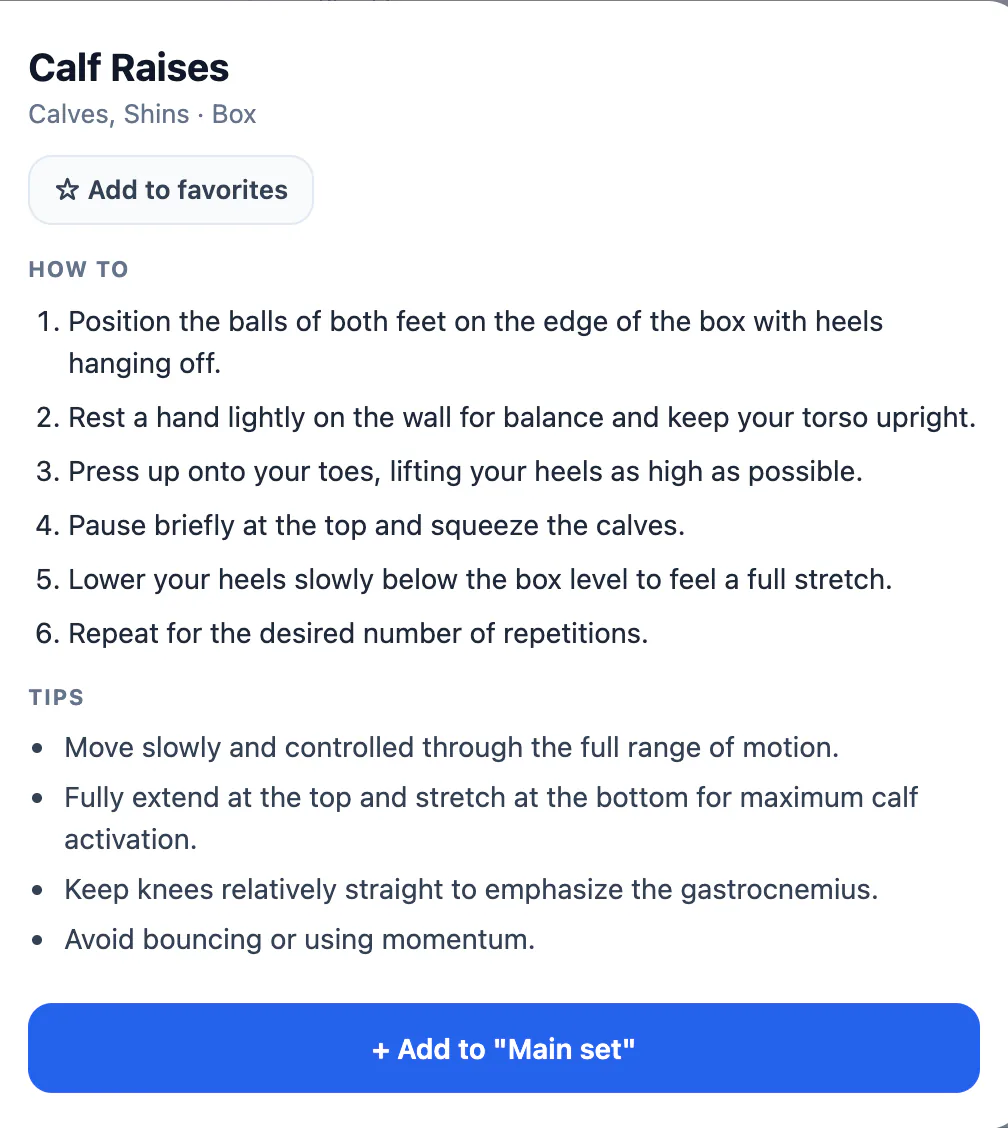
- About 2,000 exercises with technique video — a short silent loop, “How to” steps, tips, muscles and equipment.
- Search by meaning — “goblet squat”, “strengthen the ankle”, “jumps for runners”. Enter adds the exercise found to the workout.
- Filters and favorites — muscles, equipment, type, difficulty; the star gathers your working set of exercises.
- Exercise names and descriptions come in English, Spanish and Russian.
02 · Wrong sport
Every catalog is built for the gym and bodybuilding, and I need strength for a runner
Out of two thousand exercises a runner, a cyclist or a skier needs a few dozen — and not the ones on the first page of any fitness app.
What PaceTrack does
- PaceTrack collections — “Strength for runners”, “Running drills and plyometrics”, “Warm-up before running”, “Cool-down and stretching”, “Core”, “Strength for cyclists”, “Strength for cross-country skiers”.
- “Injury prevention” — exercises for the foot and ankle, knee, hips and core, with a band and without.
- “Recent” — exercises from your latest strength workouts, always at hand.
03 · From scratch every time
I retype the same strength session for every athlete, every week
Copy last week’s message, fix the weights, remember to swap an exercise for the one with a sore knee. Twenty athletes, twenty messages.
What PaceTrack does
- Blocks — “Warm-up”, “Main set”, “Cool-down” and your own; drag exercises in from the catalog and between blocks.
- Parameters in one row — sets, reps, seconds or meters, load (bodyweight, kg, % 1RM, RPE, band), rest, tempo, “per side” and a note for the athlete.
- Supersets and bulk actions — link exercises into a circuit, change sets or rest for several at once.
- “From last strength” and templates — reuse the athlete’s previous session, or save yours as a template and assign it to others.
- The coach’s AI assistant can also search the library and build a strength workout from it.
04 · Your own exercise
My exercise is not in any library
Your own drill, an exercise with your equipment, ski imitation — you cannot add it to someone else’s catalog, so the video goes into a messenger again.
What PaceTrack does
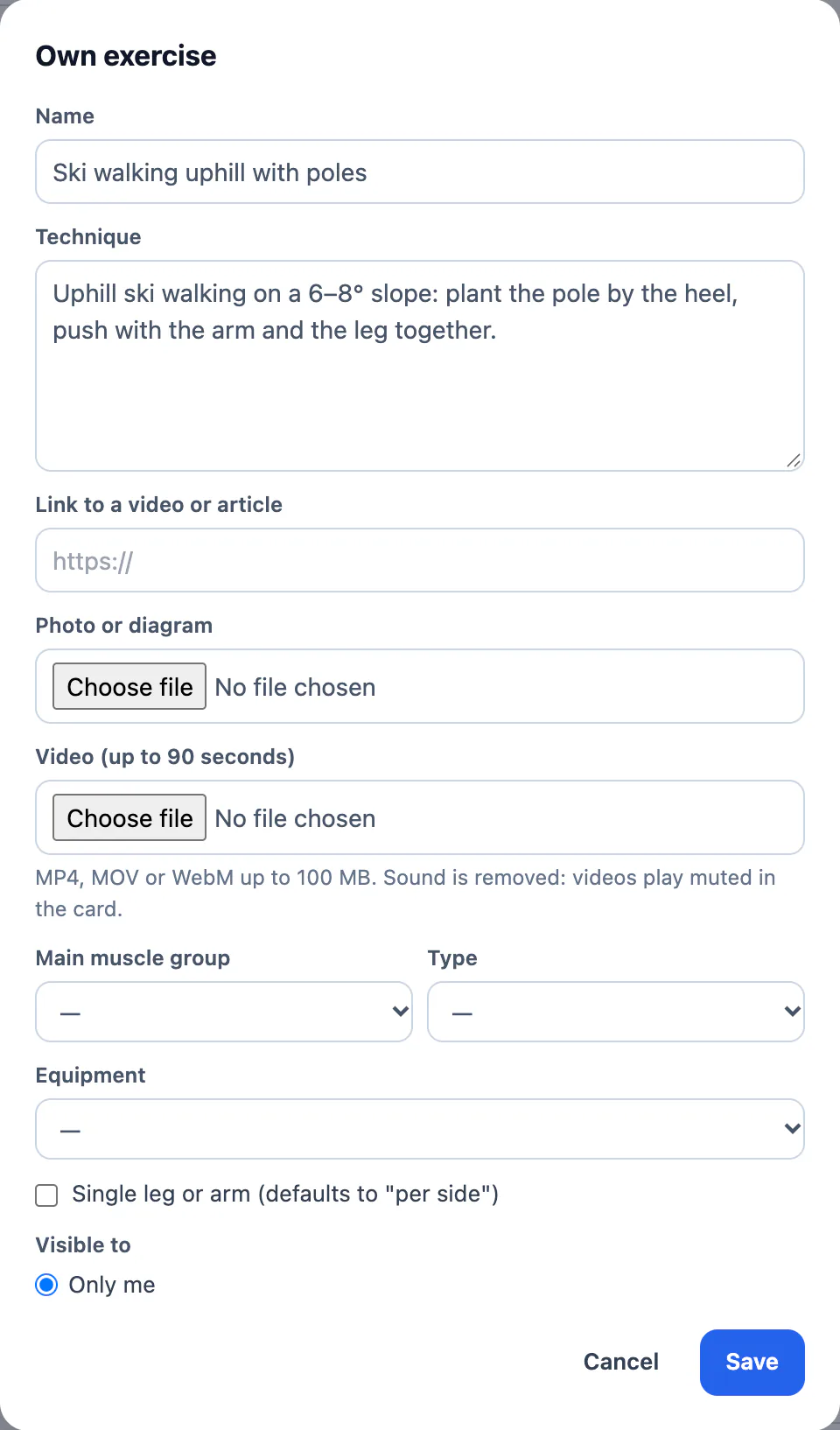
- “+ Own exercise” — name, technique description, muscles, type and equipment.
- Your photo and video — a clip up to 90 seconds, the sound is removed automatically; or a link to a video or an article.
- For you or for the club — “Only me” or “Club coaches”: one shared exercise base for the whole team.
For the athlete — and the coach again
05 · How do I do it
Romanian deadlift, three sets of ten — and how exactly do I do it?
The name of an exercise tells a beginner nothing. They look for a video themselves, find a different variation — and do something other than what you planned.
What PaceTrack does
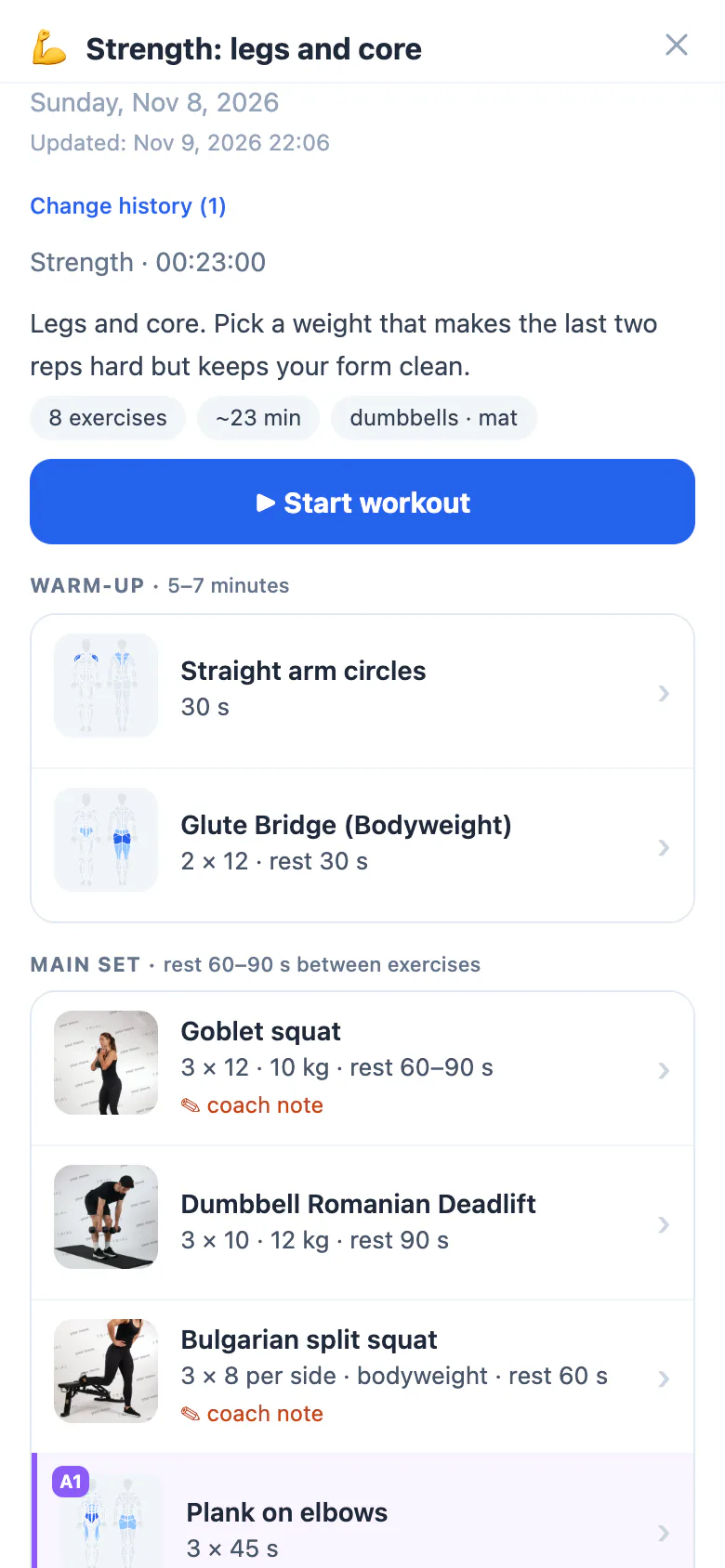
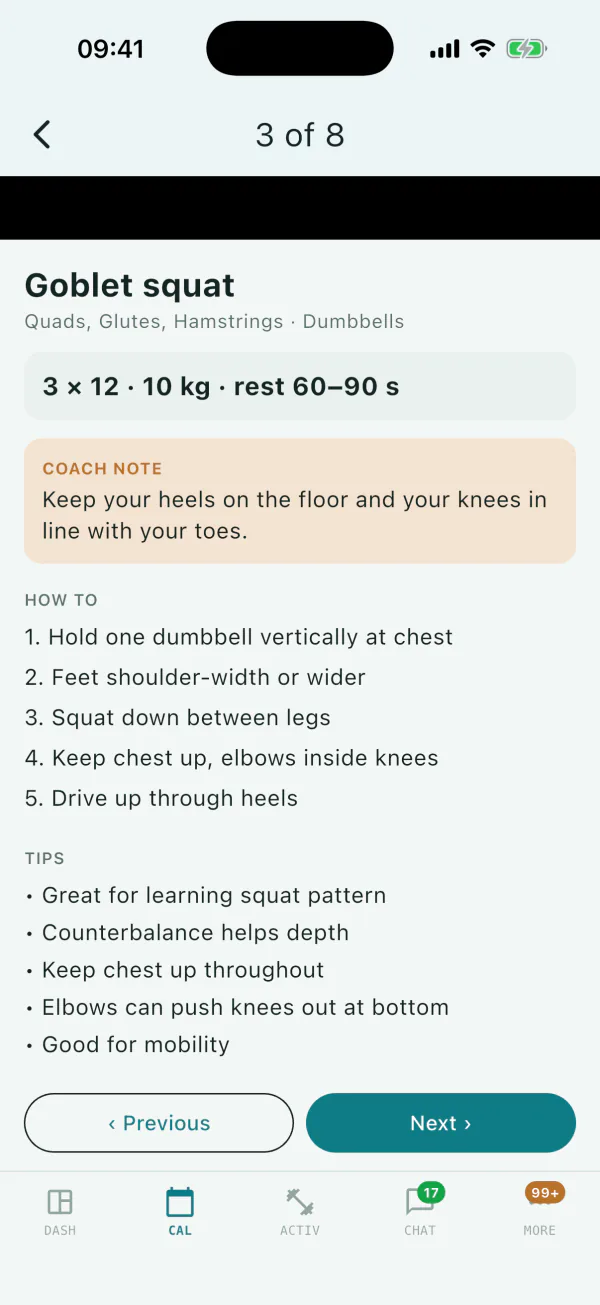
- The workout as cards — a preview, the task, sets and rest; supersets are marked A1, A2.
- Video and technique steps — in the exercise card: “How to” and tips.
- Coach note — above the instructions: “heels stay on the floor”, “rear foot on the bench”.
- Athletes of a connected coach see these workouts right away — nothing to switch on.
06 · In the gym
Between sets I scroll through the coach’s message and lose count
The phone in one hand, a dumbbell in the other. Which set that was, how long to rest and what comes next — all of it has to stay in your head.
What PaceTrack does
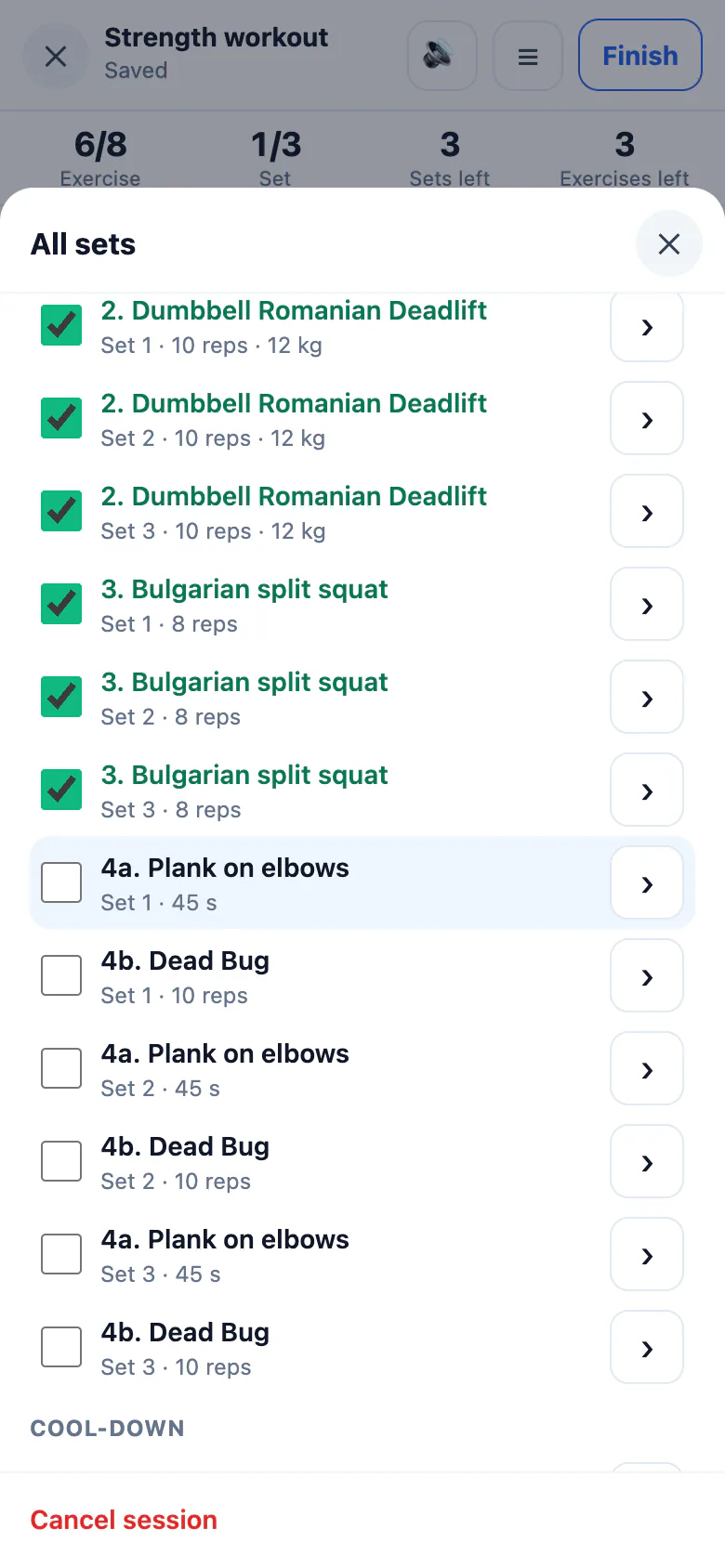
- One set at a time — the exercise video, the task and one big “Set completed” button.
- Rest and exercise timers — with a sound signal; rest can be extended or skipped.
- All sets in a list — go back to any of them, correct reps and weight, add a set.
- On the website and in the PaceTrack Athlete app — start on the day of the workout or later.
07 · What was done
The athlete writes “done”, but done what exactly — nobody knows
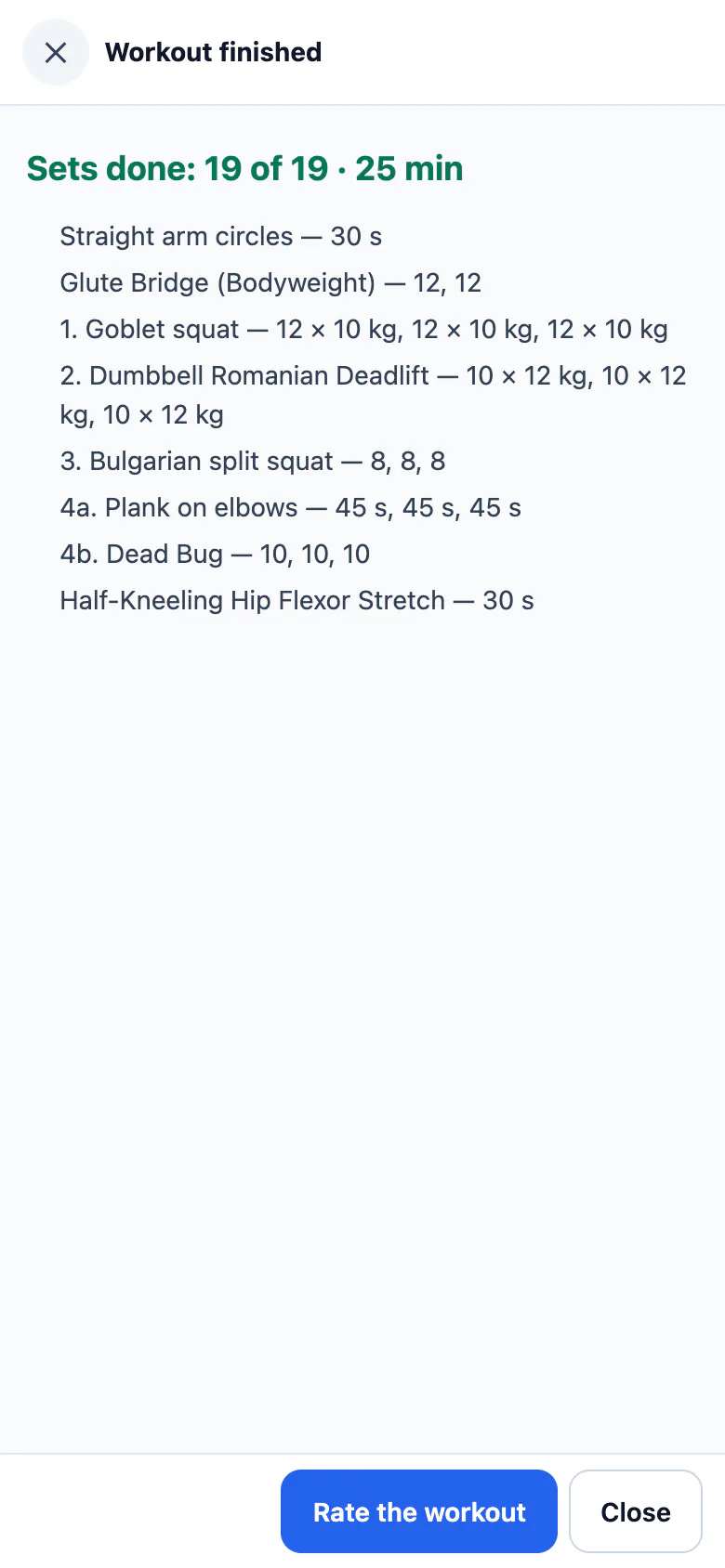
How many sets out of nineteen, with what weight, what did not work. Without that the next strength session is planned blind.
What PaceTrack does
- Marks for every set — after “Finish” you see how many sets were completed and what was done in each exercise: reps, weight, time.
- The athlete’s note — “missed the last two reps”, “the knee was bothering me”.
- A completed workout in the calendar — it appears even without a watch, timed from the first mark to the finish. If there is a watch recording, that one stays.
- The athlete rates effort and well-being as usual.
How it works
A strength workout built from exercises is not a separate service — it is a regular workout in the athlete’s plan, in the same calendar as running, cycling and skiing.
📅 One calendar
The “💪 Exercises” button is in the strength plan form and in the card menu. The calendar shows the number of exercises, and edits go into the plan change history.
📲 Website and apps
In PaceTrack Coach you can build a strength workout on the phone and review the athlete’s sets. In PaceTrack Athlete — exercise cards and the step-by-step mode.
🤖 AI assistant
It searches the library, including your favorites, and builds a strength workout for the athlete. The AI planner for Claude can do the same.
✉️ Where there are no cards
In today’s workouts digest by email and Telegram, in the .ics calendar feed and in the plan export a strength workout comes as a list of exercises.
⏱️ Duration is estimated for you
“8 exercises · ~23 min” — an estimate from sets and rest goes into the plan. A workout holds up to six blocks and forty exercises.
🌍 Three languages
The builder interface and the exercise names and descriptions come in English, Spanish and Russian.
What it costs
The library and the builder are part of PaceTrack for coaches: the strength workouts you build for your athletes are not charged separately. Athletes view and complete them for free. When an athlete or a coach builds a strength workout for themselves, each new exercise is charged on saving: 10 ₽ from their account balance.
All prices and terms →Build your first strength workout in ten minutes
Sign up as a coach, add an athlete and open a strength plan in their calendar — the “💪 Exercises” button is next to “Save”.
Start for free📖 Coach guide: strength workouts built from exercises · 📖 Athlete guide · Training videos · PaceTrack for coaches →